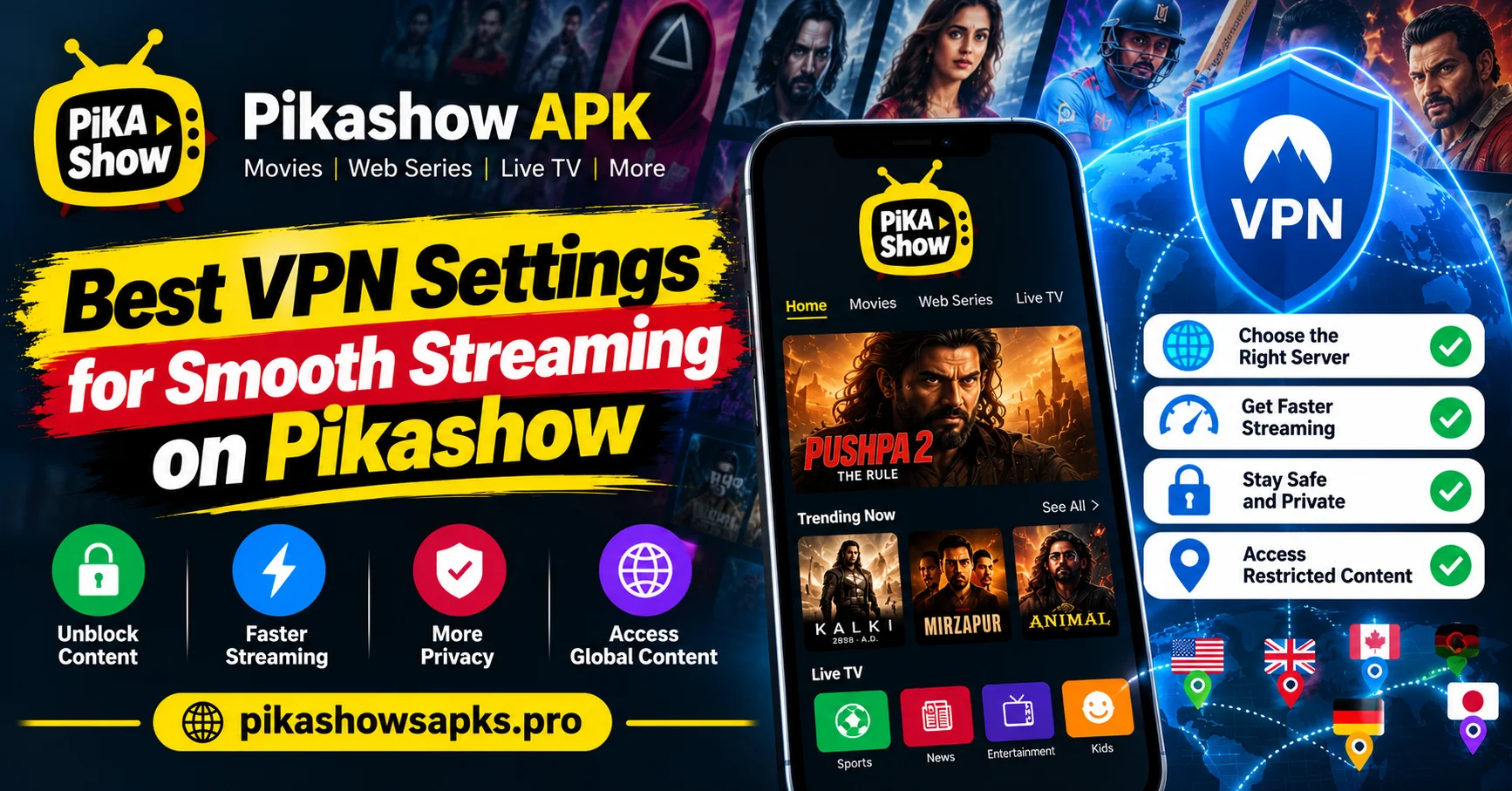
Best VPN Settings for Smooth Streaming on Pikashow
Watching movies, television shows, and other online videos is more enjoyable when playback is smooth and uninterrupted. However, streaming can sometimes become frustrating because of buffering, slow connections, unstable servers, or network restrictions. These problems lead many users to search for the best VPN settings for smooth streaming on Pikashow.
A Virtual Private Network, commonly known as a VPN, creates an encrypted connection between your device and a VPN server. Depending on your network and the VPN provider, it may improve privacy and change the route your internet traffic takes. However, a VPN does not automatically increase internet speed or fix every streaming problem.
Pikashow is a name associated with a third-party entertainment application advertised for movies, television programs, web series, and other video content. Its availability and performance can vary by version and source. Before using a VPN with any third-party streaming application, users should also consider application security, content licensing, and the provider’s terms of service.
This guide explains how VPN settings work, which configurations are generally suitable for video streaming, how to troubleshoot buffering, and how to protect your privacy while watching online entertainment.
What Is a VPN and How Does It Work?
A VPN establishes an encrypted connection between your device and a VPN server. Your internet traffic travels through that connection before reaching its destination.
The encryption can help protect traffic from being easily read by others on the same local network. However, a VPN does not make you completely anonymous, prevent every form of tracking, or guarantee that an application is safe.
Why Do Streaming Users Use a VPN?
People use VPNs for several reasons:
- Privacy on public Wi-Fi: A VPN can help protect network traffic from local eavesdropping, although HTTPS and other device protections remain important.
- Connection routing: Connecting through a different server changes the route traffic takes across the internet.
- Network troubleshooting: Comparing connections with and without a VPN can help identify whether a particular network route is causing a problem.
- Secure remote access: Some VPN services are designed to provide secure access to private networks.
A VPN should not be treated as a guaranteed solution for buffering, unavailable content, or an application that does not work.
Can a VPN Improve Streaming Speed?
Sometimes a VPN connection may perform better than a particular internet route, but it can also reduce speed because encryption and additional routing introduce overhead.
If your internet provider is not causing the problem, a VPN may offer little or no improvement. If the VPN server is distant or overcrowded, video playback may become slower.
The best approach is to test your connection rather than assume that enabling a VPN will solve every issue.
Best VPN Protocols for Smooth Streaming
A VPN protocol determines how your device establishes and maintains its secure connection. Available protocols differ between providers, so the best option depends on your device, network, and VPN application.
WireGuard
WireGuard is a modern VPN protocol designed to be relatively lightweight and efficient. VPN providers that support it may offer good speed and connection performance.
It can be a useful starting point for streaming, provided it is supported by your VPN service and device.
IKEv2/IPsec
IKEv2/IPsec is another commonly supported protocol. Some implementations handle changes between Wi-Fi and mobile data well, which can be helpful for users who move between networks.
Actual performance depends on the VPN provider and network conditions.
OpenVPN
OpenVPN is a widely used protocol with UDP and TCP transport options in many implementations.
OpenVPN over UDP is often worth testing when speed and latency are important. TCP may be useful on certain restrictive networks, but it can perform differently depending on the connection.
Which Protocol Should You Choose?
There is no universal winner for every user. If your provider offers WireGuard, IKEv2, or OpenVPN, begin with its recommended modern configuration and compare performance.
Avoid choosing a protocol solely because a website claims it is the fastest. Real-world speed depends on server load, distance, routing, and your internet connection.
Best VPN Server Location for Streaming
The server location can have a major effect on connection latency and speed.
Choose a Nearby Server
A nearby VPN server is usually a sensible first choice because traffic generally travels a shorter distance.
For example, if you are connecting from Pakistan, start by testing a reliable server geographically close to you. A nearby server is not guaranteed to be the fastest, but it is a practical starting point.
Avoid Overloaded Servers
A VPN server may become congested when many users connect simultaneously. This can increase latency and reduce available bandwidth.
If the VPN application offers server-load information, consider choosing a less crowded server. Otherwise, test another nearby server and compare the results.
Do Not Assume a Distant Server Is Better
Connecting to a server far away may increase latency and introduce additional routing delays.
Choose a distant location only when there is a clear reason, such as a network-routing issue or a legitimate service requirement.
Respect Regional Content Restrictions
Streaming catalogues and broadcasting rights vary by country. A VPN does not grant permission to access copyrighted content or override a provider’s licensing terms.
Use services in accordance with their terms and applicable laws.
Recommended VPN Settings for Streaming
The following configurations are general starting points for a reputable VPN service. They are not verified Pikashow-specific settings, and their availability depends on the VPN application.
Protocol Setting
Start with WireGuard if your provider supports it and recommends it for your device. Otherwise, try the provider’s recommended protocol or a supported alternative.
If the connection becomes unstable, compare the available protocols rather than changing several settings simultaneously.
Server Selection
Choose a nearby server with a stable connection. If playback is slow, test another server in the same region before trying a distant location.
Kill Switch
A kill switch blocks internet traffic if the VPN connection unexpectedly drops. It can help prevent traffic from continuing outside the VPN tunnel.
Keep it enabled when privacy is important, but remember that some applications may stop connecting if the VPN disconnects. This setting does not improve streaming speed.
Split Tunneling
Some VPN applications support split tunneling, which lets users choose which applications use the VPN.
This feature can help with network troubleshooting, but it changes which traffic receives VPN protection. If privacy is your goal, understand the consequences before excluding an application from the VPN.
Automatic Connection
Automatic connection can help establish a VPN connection when you join an unfamiliar Wi-Fi network or start your device, depending on the provider’s settings.
It is a privacy and convenience feature rather than a guaranteed streaming-speed improvement.
DNS Settings
Some VPNs provide their own DNS resolution. Leave the provider’s recommended secure DNS configuration enabled unless you have a specific technical reason to change it.
Changing DNS servers does not normally solve problems caused by an unavailable video source or an overloaded streaming server.
How to Reduce Buffering While Using a VPN
Buffering can result from several causes, including low bandwidth, unstable Wi-Fi, VPN congestion, device limitations, or server-side problems.
Step 1: Test Your Internet Without the VPN
Use a trusted speed-test service or another legitimate streaming platform to check your normal connection.
Record the approximate download speed and whether playback is stable. Do not enter sensitive information into unfamiliar testing websites.
Step 2: Connect to a Nearby VPN Server
Turn on the VPN and select a nearby server. Repeat the speed test under similar conditions.
Compare download speed, latency, and connection stability. A small speed difference may not matter, but a major reduction could affect video playback.
Step 3: Try a Different Server
If the VPN connection is slow, switch to another server offered by the same provider.
Make one change at a time so you can identify which configuration performs better.
Step 4: Reduce Video Quality
If a legitimate streaming player offers resolution settings, choose a lower quality when bandwidth is limited.
Lower resolutions require less data, which may reduce interruptions on a slow connection.
Step 5: Restart Your Network Equipment
If your connection is unstable, restart your router according to its manufacturer’s instructions.
Wait for the connection to return and test the VPN again.
Step 6: Check Whether the Streaming Service Is Available
If other websites and streaming services work normally but a particular source continues to fail, the problem may be with that service.
A VPN cannot restore a server that is offline or make an unavailable video source operational.
VPN Settings for Android Phones
Android users should review both VPN settings and general device performance.
Keep the VPN Application Updated
Use the official application from the verified VPN provider. Updates can address security issues and improve compatibility.
Avoid modified VPN APKs or applications from unknown websites.
Review Battery Restrictions
Some Android devices restrict background applications to conserve battery. Depending on the phone and VPN application, aggressive battery restrictions may interrupt a connection.
Consult the VPN provider’s official instructions before changing background or battery settings.
Check Wi-Fi and Mobile Data
Compare performance on Wi-Fi and mobile data when possible. Mobile networks can have different coverage, congestion, and data restrictions.
Be aware that high-quality video streaming can consume substantial mobile data.
Avoid Unnecessary Network Tweaks
Changing private DNS, installing network boosters, or modifying advanced settings without understanding them can create additional problems.
Start with the VPN provider’s recommended configuration and basic network troubleshooting.
How to Choose a Reliable VPN for Streaming
Not all VPN providers offer the same security, privacy, or performance.
Look for a Clear Privacy Policy
A trustworthy provider should explain what connection information it collects, how long it retains that information, and whether it shares data with third parties.
Be cautious about unsupported claims that a service provides complete anonymity.
Check Security Features
Look for modern encryption, secure protocols, reliable connection handling, and clear information about the provider’s security practices.
Independent audits can provide useful evidence, although they do not guarantee that every aspect of a service is risk-free.
Consider Server Availability
A provider with several well-maintained servers may offer more options when a connection becomes congested.
However, a large server count alone does not guarantee better performance.
Review Data Limits and Pricing
Some VPN plans restrict bandwidth, server access, or connection features. Review the terms and total cost before purchasing a subscription.
Avoid services that require unnecessary permissions or make misleading claims about guaranteed speed.
Is It Safe to Use a VPN With Pikashow?
A VPN and an application serve different purposes. A VPN protects certain aspects of network traffic, while the application itself controls its own behavior and permissions.
Using a VPN does not remove malware from an APK, verify its publisher, prevent every type of tracking, or establish that its content is legally distributed.
Before installing a third-party application, verify its source, review permissions, and keep your device security protections enabled.
Copyright restrictions also remain relevant. Movies, television shows, and sports broadcasts may require authorization for distribution. Choose legitimate services and follow applicable laws and service terms.
Common VPN Problems and Solutions
VPN Connects but Streaming Is Slow
Try a nearby server, compare available protocols, and test your normal internet connection. The VPN may introduce extra latency or have limited capacity.
VPN Keeps Disconnecting
Check your internet stability, update the VPN application, and review the provider’s connection guidance. Battery restrictions may also affect background behavior on some Android devices.
Streaming App Cannot Connect
The problem may involve the application, its servers, network configuration, or service restrictions. Test other legitimate services to determine whether the issue is general or specific to one application.
Internet Stops When the VPN Disconnects
A kill switch may intentionally block traffic when the secure tunnel fails. Check the VPN status and reconnect through the official application rather than disabling security features without understanding their purpose.
Frequently Asked Questions
What is the best VPN protocol for streaming?
WireGuard is a useful starting point when supported by your provider. IKEv2 and OpenVPN may also perform well depending on the network and device.
Does a VPN stop buffering on Pikashow?
Not necessarily. A VPN may improve a particular network route, but it can also slow your connection. Buffering can result from server problems, weak internet, or device limitations.
Which VPN server should I choose?
Start with a nearby, reliable server and compare performance. The best server is the one that provides stable connectivity for your legitimate streaming service.
Should I keep the VPN kill switch enabled?
A kill switch can help prevent traffic from leaving the device outside the VPN tunnel if the connection drops. It is useful for privacy, although it may temporarily interrupt internet access.
Does a VPN make third-party APK files safe?
No. A VPN does not verify an application’s source or remove malicious software. File authenticity and application permissions must be assessed separately.
Can a VPN increase my internet speed?
It can sometimes improve a particular network route, but it often adds overhead. Performance depends on the provider, server, and underlying connection.
Conclusion
The best VPN settings for smooth streaming depend on your device, internet connection, VPN provider, and the service you are using. A nearby server, a modern supported protocol, and a stable connection are sensible starting points.
Test your connection with and without the VPN, compare servers one at a time, and adjust video quality when bandwidth is limited. Remember that a VPN cannot fix every streaming issue or make an unverified application safe.
For the best overall experience, use a reputable VPN when appropriate, protect your device, and choose streaming services that respect privacy and have the necessary rights to distribute their content.